Understanding Obstructive Sleep Apnea
Do you have trouble sleeping? If so, you’re not alone. An estimated 22 million Americans suffer from a lack of sleep—and even exhaustion—caused by sleep apnea. Chronic snoring problems and interrupted sleep aren’t just an inconvenience. Untreated sleep apnea can lead to more serious health risks. Sleep apnea is a common but serious sleep disorder that causes breathing interruptions during sleep.
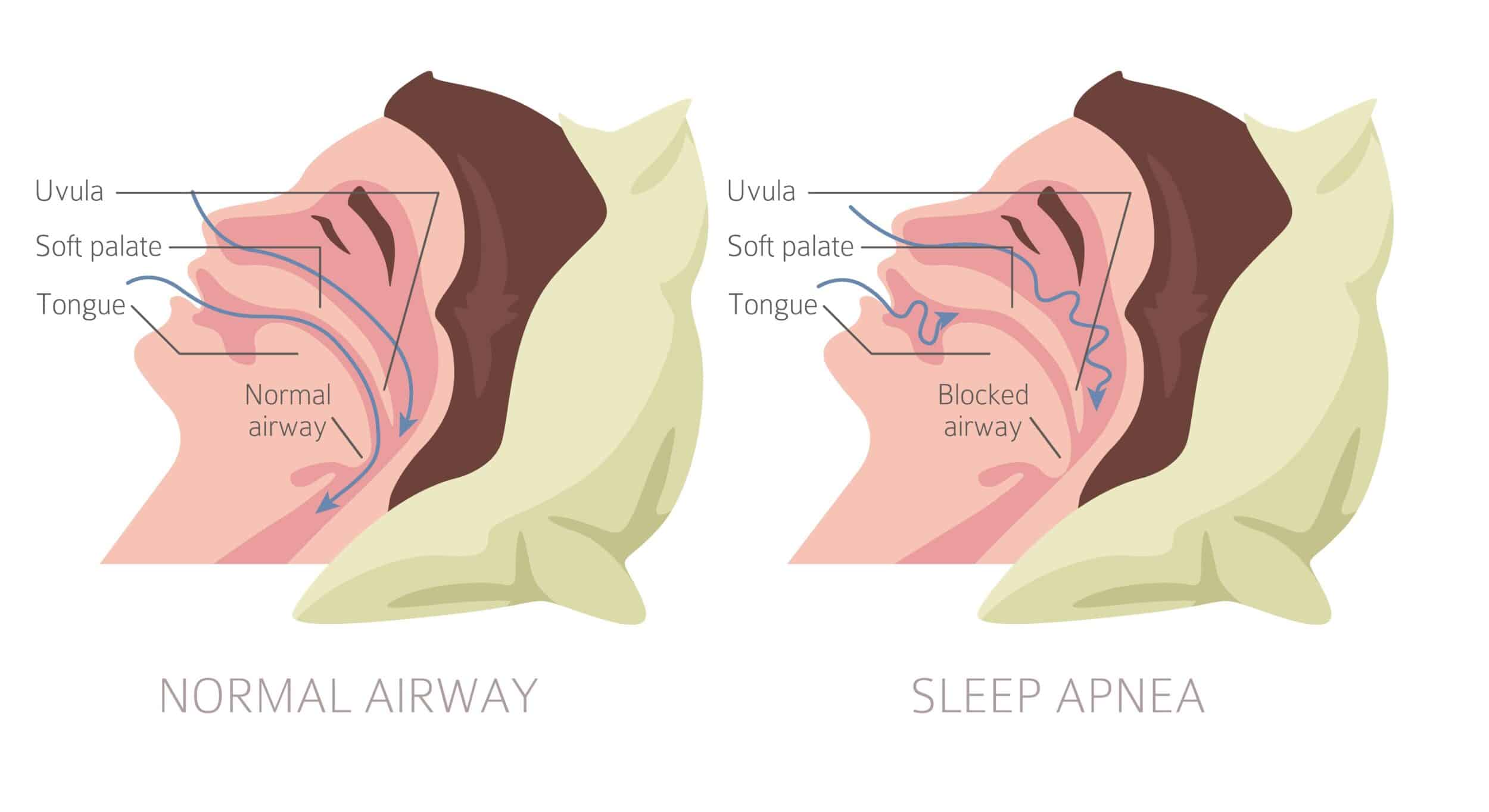
When we sleep, gravity and muscle relaxation allow the tongue and surrounding soft tissues to fall back into the throat, obstructing airflow. This causes pauses in breathing. These pauses are called apneas.
The word apnea means without breath. A person may have partial pauses in breathing (hypopneas), or complete pauses (apneas) that last 10 seconds or longer during sleep. These pauses in breathing are often accompanied by a drop in blood oxygen level.
The struggle to breathe and the drop in oxygen saturation will eventually cause the person to momentarily arouse, opening the throat and allowing them to breathe again. These arousals are brief and typically not remembered the next morning. Longer apneas may cause the sufferer to fully awaken to a frightening feeling of choking. This pattern can occur hundreds of times per night, interrupting the body’s normal sleep cycle and preventing the deep, restorative sleep our bodies need.
Some short-term consequences of sleep apnea include excessive daytime sleepiness, low energy, poor concentration, irritability, slowed reflexes, and an increased risk of accidents.

